
Announcement · Archived
1 Oct 2019
Interview with Rachel Kyte
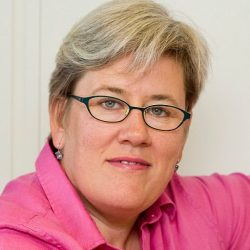
Rachel Kyte, one of our advisory board members, has switched hats this week.
After almost 4 years as Special Representative of the UN Secretary-General and CEO of Sustainable Energy for All, she was named dean of The Fletcher School at Tufts University.
Ahead of this transition, we have conducted a short interview with Rachel about her learnings in her UN roles – and would now like to share it with you.
Q1: You have been heading SEforALL for almost 4 years. Biggest win/fail?
Win – greater shared sense of direction on a critical path to deliver universal energy access – affordably, reliably, cleanly.
Fail – not enough movement of money to make big bets on grid densification, and distributed renewables. Still too many people making disastrous bets on fossil fuel infrastructure based on bad data and a lack of imagination and an international community that hasn’t showed up fit for purpose – yet.
Q2: SDG7 will be achieved in 2030, says Thomas Gottschalk from A2EI (based on Economies of Scale and low price of tier 1 products). Do you share his optimism?
If it isn’t no other goal will be either – health care with no power? Education rates going up with no connectivity, computer or warmth in winter? Agricultural productivity up with no drop per crop irrigation and no cold storage? I would rather be an optimist and wrong than a pessimist and right.
Q3: What are the three things that need to happen to boost the offgrid solar space (beyond solar lights?)
Domestic finance to fund the country’s future in countries where the access gap is large and where domestic banks and other pools of capital are not invested in their own energy future.
Serious commitment at scale across those countries where progress is needed most of development finance for market creation support and a re pooling of all the funding already committed for clean energy solutions so that it will take more risk, be more patient and more flexibly deployed. We have no time.
There is room for everyone – grid densification, mini grids, micro grids, stand alone solar home systems – and we need more efficient pumps and appliances. Focus on building markets and support for the poorest and stop having arguments about whose handpicked solution is right.
Q4: What’s your most important lesson learned from SE4All to inspire the next generation of global leaders at Fletcher?
LISTEN and ASK GOOD QUESTIONS – all my learning came from listening to entrepreneurs, consumers, people putting money at risk, women community leaders and social entrepreneurs (including the A2EI’s Thomas’s) and cross-referencing that with the data that said different things and had become received wisdom. The data sets informing decision making are often gender blind, curated by government only, wildly off every year, presented in a way that no one who needed it would read it. From there we focused on marshaling data and evidence and asking different questions of it – the questions that come from an assumption that we were serious when we agreed that by 2030 we would have universal access.
Q5: How radical do you want/allow your children to be to fight climate change?
Radical means to go to the root. I hope my children will enquire to get to the root of the problem – whatever that problem or challenge will be – including the climate emergency and then respectfully do whatever it takes to help find solutions.
Q6: What can/should good lobbyists (e.g. solar) learn from bad lobbyists (e.g. fossil fuel)?
They may be bad but they are good. They have long term goals and commit to those goals. They are disciplined.
So, follow the money. Understand the data and evidence. Understand where others are coming from. Don’t talk down to people. People should be scared, but they must be empowered to make different choices to protect their families and communities.